Keep physical management of cryptographic keys when stored information is encrypted by external service suppliers. Cryptographically safe pseudorandom number mills (CPRNGs) use entropy to create cryptographic keys with unpredictable values. The resulting bit sequences must comply with strict algorithmic requirements to make sure sturdy encryption. Different essential components embrace key size and key randomness. Key length determines the complexity of the encryption key, which is carefully tied to its resistance towards assaults. Widespread key lengths include 128 bits and 256 bits, with longer keys typically offering stronger safety.
Definition Of Cryptographic Algorithms And Cryptographic Keys
Regardless of trade, today’s enterprises are increasingly involved in the business of knowledge. By collecting and analyzing relevant data, these organizations can gain helpful insights that enable them to better tailor their services or products to meet the distinctive needs of their clients or clients. Gathering data can also streamline necessary processes similar to completing transactions online. Keys should by no means be stored alongside the data that they protect (e.g. on a server, database, etc.), as any exfiltration of the protected data is more likely to compromise the vital thing additionally. A single compromised key could end in a massive information breach, resulting in reputational damage, punitive regulatory fines, and a lack of investor and customer belief. This CMS guide will use the time period revoked key notification (RKN) to refer to a mechanism to revoke keys.
- It is sometimes helpful to escrow key materials to be used in investigations and for re-provisioning of key materials to users within the occasion that the secret’s misplaced or corrupted.
- Constructed on decades of safety-critical experience, our Belief Lifecycle Administration (TLM) platform secures every little thing from silicon and devices to clouds, AI, and enterprise ecosystems.
- Cryptography uses encryption to remodel sensitive info into unreadable codecs, ensuring that solely approved events can access it, thereby shielding enterprises and their clients from potential security threats.
- Choose non-exportable use through a cryptographic module or service when the menace and operational wants justify it.
Understanding The Encryption Key Administration Lifecycle
The safety of the cryptosystem depends upon successful key administration. Proper administration ensures a key stays protected all through its lifecycle, from era and use to storing and deletion. Many strict standards, from NIST to PCI DSS, guide key management and rotation.
Guidelines To Reduce The Probability Of A Key Compromise
Between frequent key rotation and escalating key volumes, it is usually too difficult for IT groups to maintain up with guide processes. Sectigo Certificate Manager (SCM) automates the entire encryption key lifecycle, including key generation, storage, and deletion, decreasing administrative overhead and minimizing the danger of human error. Managing cryptographic keys is crucial for preserving information secure. It entails creating, distributing, storing, using, updating, and eventually destroying keys properly. Good key administration ensures that keys are secure from unauthorized access and could be trusted all through their life. By doing this, organizations defend sensitive information and preserve the security of their digital communications.
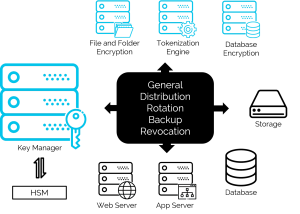
In contrast, the asymmetric encryption mannequin https://webtecgdl.com/fault-tolerant-quantum-computer-memory-in-diamond.html permits for freely sharing the public key, with the personal key strictly controlled and protected by the vital thing pair proprietor. A belief store is a repository that incorporates cryptographic artifacts like certificates and personal keys which are used for cryptographic protocols similar to TLS. With efficient cryptographic key management, information that is encrypted can nonetheless be protected even within the occasion of a breach, since encrypted data cannot be decrypted without the best keys. Proper utilization of encryption and key administration will assist an organization’s efforts to guard their data. NIST SP 800-57 Recommendations for Key Administration (Part 1, Revision 5) supplies an updated guideline for general cryptographic key management. Requirements define each useful and assurance necessities throughout the CMS safety and privacy surroundings.

As digital gatekeepers, these keys keep information totally protected by controlling who can entry it. Rotation doesn’t restore unknown copies, derived keys, cached periods, backups, or a compromised issuer. A non-exportable key can still be abused through an authorized cryptographic API. Destroying one storage copy doesn’t prove that reminiscence, replicas, logs, and snapshots are clear. A cryptographic algorithm is a computational process or formula used to encrypt and decrypt information to ensure safety and privacy.

If a key just isn’t obtainable when required, or worse nonetheless lost because of some fault, accident or catastrophe with no backup obtainable, then the information it’s protecting can also be inaccessible / misplaced. Each key should be generated for a single, particular objective (i.e. the intended application and algorithm) – if it is used for one thing else, it may not provide the expected or required level of protection. Problem, deploy, rotate, revoke, get well, and retire certificates and private keys with out breaking name or trust validation. Key administration systems ought to log who accessed the keys, when the keys are accessed, what the keys shield (including in the event that they protect different keys), and what the keys are used for. The location of stored keys ought to be documented in a Key Administration Plan, which ought to be up to date as needed, but at least annually.